


The critics: “Demographics, with its long, sweeping trends that play out over decades, is of little value to us. As private equity investors, our horizon is 8 + 1 + 1 years. And since we’re increasingly buying secondaries and trying to exit our primaries early, our time horizon is effectively four to five years. Demographics is interesting and fosters challenging philosophical debate, but our portfolio companies can’t use it.”
“Takes too long” is the main reason companies, fund managers, governments, and individuals dismiss the rich, actionable information that demographic analysis uncovers.
The reality: Almost every country experiences two demographic tailwinds and two headwinds concurrently. Two opportunities to invest and two that need an exit. Looking globally, one finds hundreds of imminent trend changes.
This brings us to an interesting risk management paradox. In our 5 Quadrants framework, demographic change belongs predominantly in Quadrant 1, since counting people is simple, measurable and usually predictable. One additional birth, death, or immigrant won’t impact the aggregate. Millions of people moving through age cohorts, on the other hand, can radically change the demand for products and services. And since most of those demand and supply-altering human waves are already alive, we don’t need to predict them. The trends are there for all to see, though we tend not to look for them.
A changing age distribution is not the same thing as an unpredictable distribution. Germany’s age profile is not a stationary bell curve, nor does it need to be. Birth cohorts age in an orderly fashion, mortality can be estimated, and migration is the larger uncertainty. The relevant test is whether the range of plausible outcomes is narrow enough for useful forecasts. In the short term, it generally is.
Travel & Leisure Headwind
Take Germany: The travel sector has been strong for fourteen years, propelled by a demographic tailwind that has enabled prosperity for all. The 58- to 67-year-old cohort have reached peak earnings, and their expense burden has collapsed; they’ve paid off their mortgages, and their children have become self-supporting adults. This group allocates over 10% of their budget to vacations and cultural events.
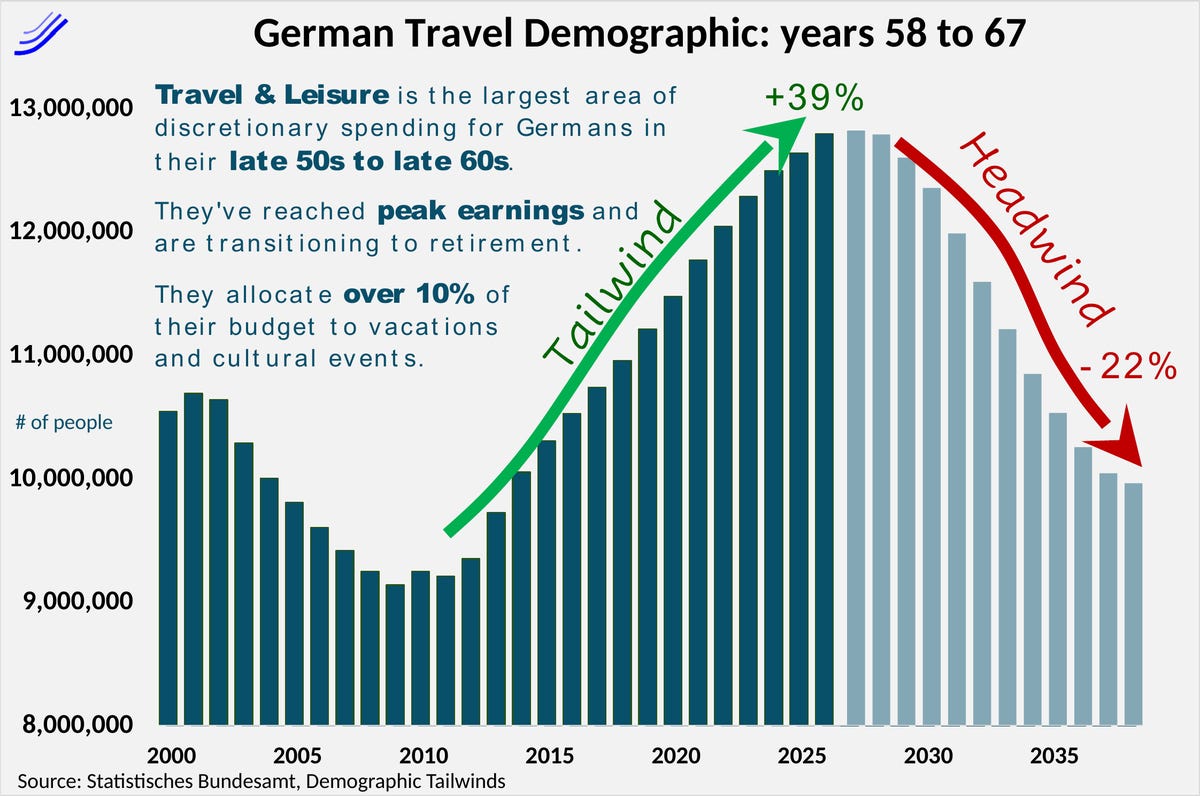
Figure 1: The 58- to 67-year-old German travel demographic tailwind ends in 2026-27. Quid deinde?
But the space has become crowded and competitive, the tailwind has lost energy, and a strong headwind looms. The good times are about to end. Abruptly. Sell your travel business.
The population decline is largely predictable. The profitability of travel companies is less so. A business carrying fixed costs and substantial debt might find that a manageable decline in customers wipes out its earnings. Competitive discounting, refinancing pressure and knock-on effects can transform a Q1 demographic headwind into a far more complicated investment risk.
Healthcare Tailwind
It is no secret that Germans are ageing. But since 2012, healthcare spending has been slower than anticipated. The population didn’t age the way most “thought” it would. While it is widely recognised that by ages 50 to 59, nearly half of Germans already live with at least two chronic diseases, many avoid doctors, delay treatment, or are simply unaware (or in denial) of their maladies.
Healthcare demand is a function of those seeking treatment, not merely the presence of a disease. Until their mid-60s, Germans use outpatient primary care rather than high-cost inpatient interventions. A surge in major complications that require hospitalisation and surgical intervention (ischaemic heart disease, advanced oncology, or type 2 diabetes organ damage) hits around 68 years of age, and this window of acute medical demand continues until 78. This is the time for joint replacements, cardiac bypasses, stents, and aggressive chemotherapy.
Healthcare demand doesn’t end at 78. In fact, costs increase. But the nature of treatment changes from fixing and curing to long-term care and geriatrics. Nurses, ambulatory home aid, cognitive decline management, and emergency transport dominate.
A ten-year positive healthcare tailwind looms. What are the odds that Germany has enough hospitals, clinics, doctors and nurses to meet the incipient 40% demand surge?
The healthcare population forecast is Q1. Delivering the additional care is not as simple. Hospitals, staffing, equipment, and public budgets form an interconnected system. Capacity planning belongs in Q3, and serious shortages and wider economic feedback loops can shift the risks into Q4.
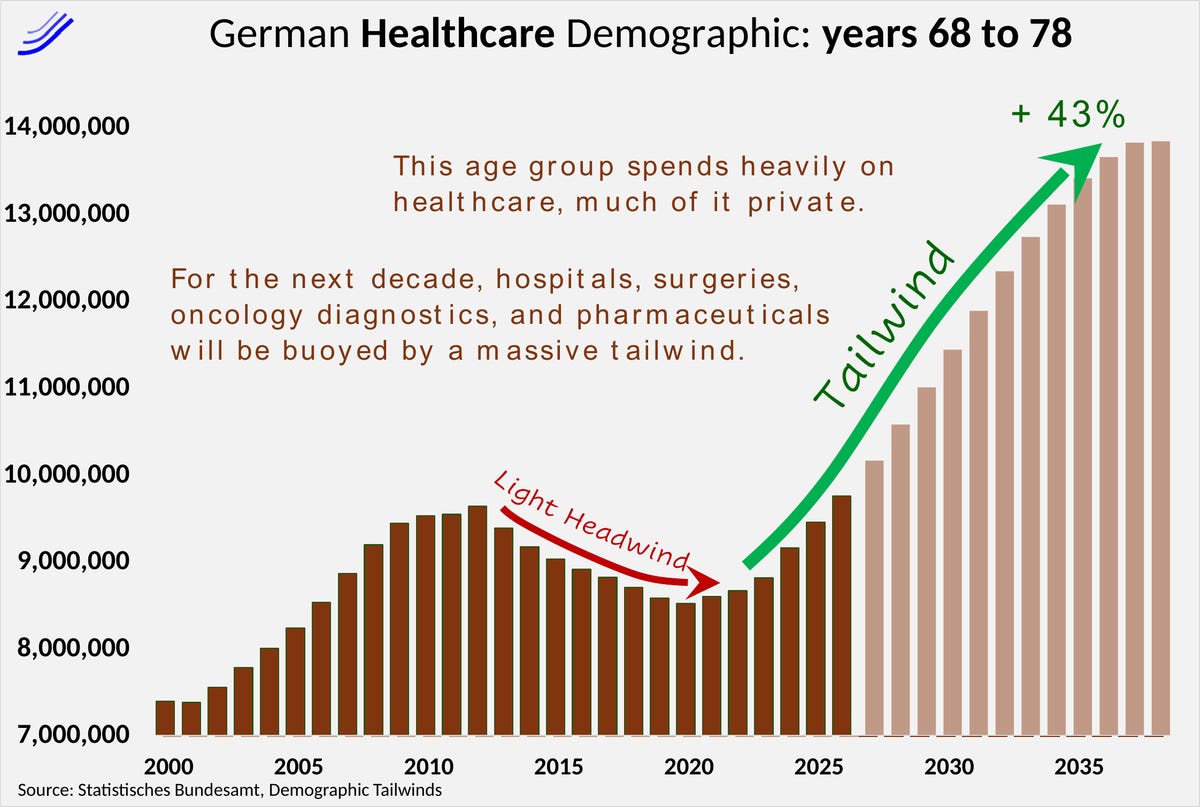
Figure 2: The 68- to 78-year-old German healthcare demographic tailwind will be strong for the next decade. Great news if you’re in the business of fixing people. Not so great if you’re a German baby boomer anticipating a smooth, ailment-free retirement.
Primary School Headwind
The Germany primary school student population jumped by 440,000 over the last decade, propelled by a surge of 6- to 10-year-olds. A palpable demographic tailwind.
To accommodate this youth tsunami, 198 new primary schools were built, and an even greater number were expanded or renovated. At a cost of approximately €30 million to build a new primary school and many millions more to expand existing stock, the capital cost has been at least €10 billion over the last seven years. But the problem keeps getting worse. The youngsters are overwhelming the system. A recent report warned that:
“Germany’s school infrastructure is at its limits. There is a huge need for construction and refurbishment, while in budgeting terms, many coffers of federal states and municipalities are empty.”¹
¹ Drees & Sommer, From Renovation Backlog to Educational Boost: Strategies Out of the School Construction Crisis. 4 November 20-25.
That’s a major education infrastructure build for a compact 6- to 10-year-old demographic in a country that we thought had a collapsing fertility rate. Where did all the kids come from? Did we miss a German fertility turnaround? And how far into the future will this demand carry?
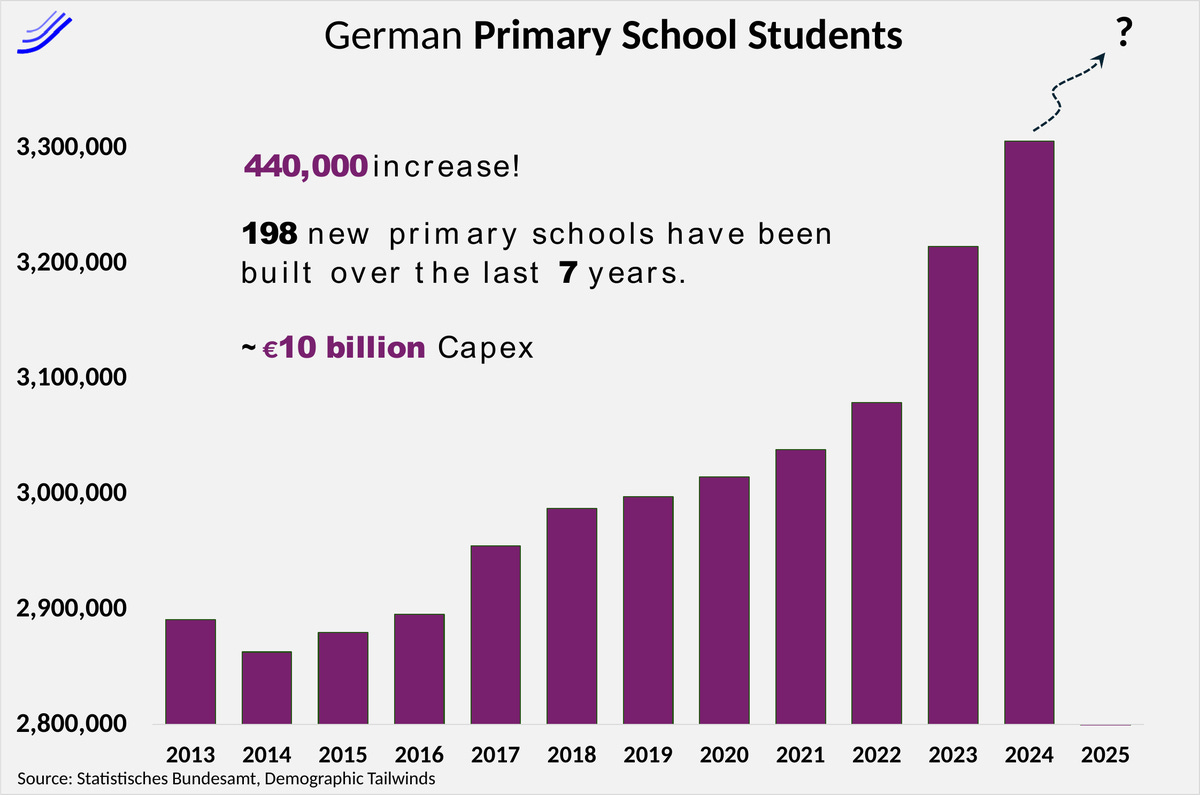
Figure 3: The 6- to 10-year-old German primary school demographic. To infinity and beyond?
We can answer those questions with four numbers and basic arithmetic.
Babies can be counted (Destatis, Germany’s Federal Statistics Office, posts monthly numbers),
The number of probable mothers can be accurately estimated since the median age of a first-time German mother is 31 (with a slightly right-skewed distribution), so look back 31 years and check how many baby girls were born
Fertility rates adjust slowly and usually downward, so extrapolate conservatively.
Immigrants bring a slightly higher fertility rate, so factor that in to the count of recently arrived potential mothers.
With those numbers, it is relatively straightforward to accurately estimate the primary school population 6 years forward and approximately estimate the demographic out a decade. 2025 was peak primary school, and the numbers drop by 20% over the next decade. Maybe put a halt on new construction, stop purchasing small desks and chairs, and expand primary school teacher training so they can next educate secondary school students.
With a bit of demographic foresight, schools that can accommodate both primary and secondary students could have been built.
A school building has a much longer useful life than a demographic upswing. The cohort decline is a highly predictable Q1 risk that can still deliver an enormous economic surprise if planners ignore it. Underused buildings and stranded capital are the likely consequences of decisions made by extrapolating existing trends. Managing a network of schools is a more complex, Q3-style infrastructure problem.
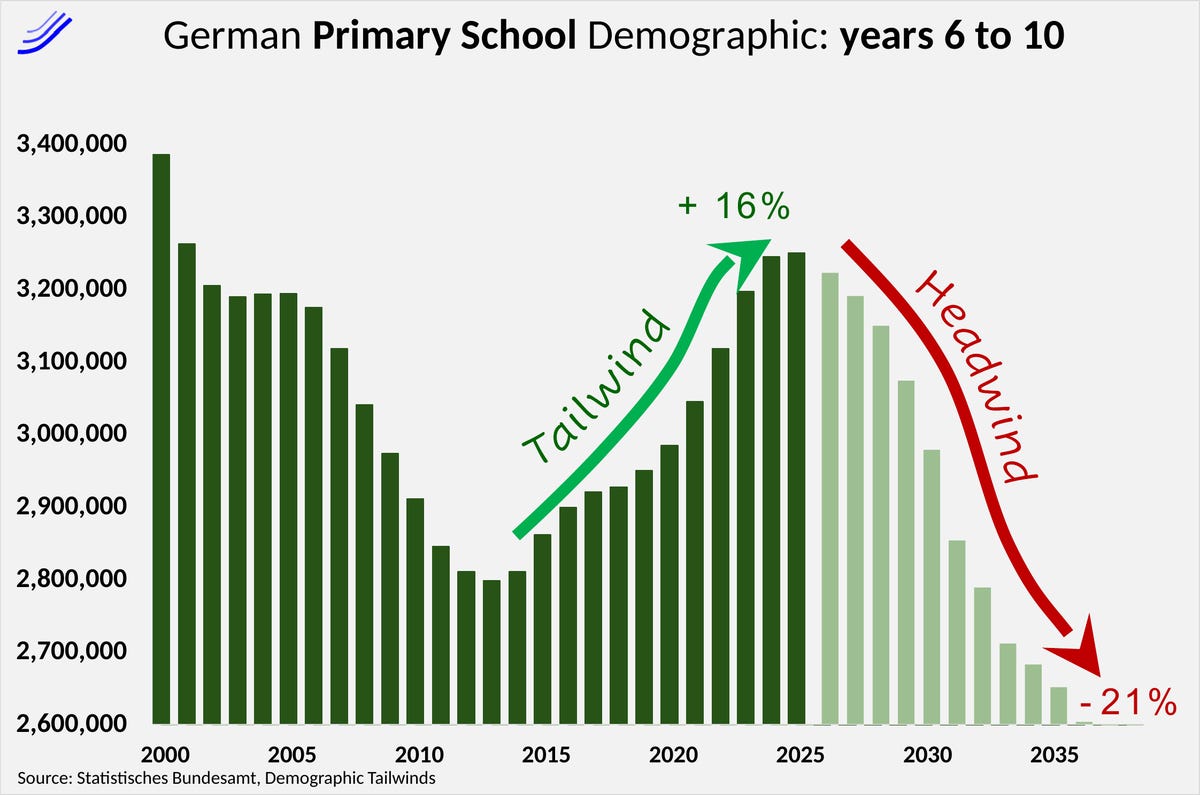
Figure 4: The 6- to 10-year-old primary school demographic is at the top of the rollercoaster. Hang on.
A Teenage Tailwind
The most unexpected tailwind is a German teenage boom. It’s not enormous, but after a seventeen-year headwind where the teen population fell by 22%, few are prepared for increased demand. Get ready for more fast fashion purchases, increased Doner kabob and bubble tea sales, mobile and audio tech buys, and online gaming microtransactions (mainly for the boys).
Even less expected is that India will undergo an 11% shrinkage of its 13- to 17-year-old population at the same time. More German teens offset by fewer Indian teens isn’t intuitive. We think of Germany as old and India as young. But the data doesn’t lie (much).
The curious thing about demographics is that changes are rarely surprising, though our failure to anticipate them is. We notice the tailwinds after businesses have expanded and the headwinds only once demand has disappeared. Neither turning point necessarily qualifies as a statistical surprise.
The lesson for risk managers: We pour resources into forecasting things we scarcely understand, from interest rates to equity prices, while ignoring demographic turning points that can often be seen years ahead. The surprise is that so few people see it coming, and those that do see the population statistics in black and white rarely believe them. We’ve been warned of our inability to predict for so many years that we no longer trust accurate population data that has been advanced by a few years.
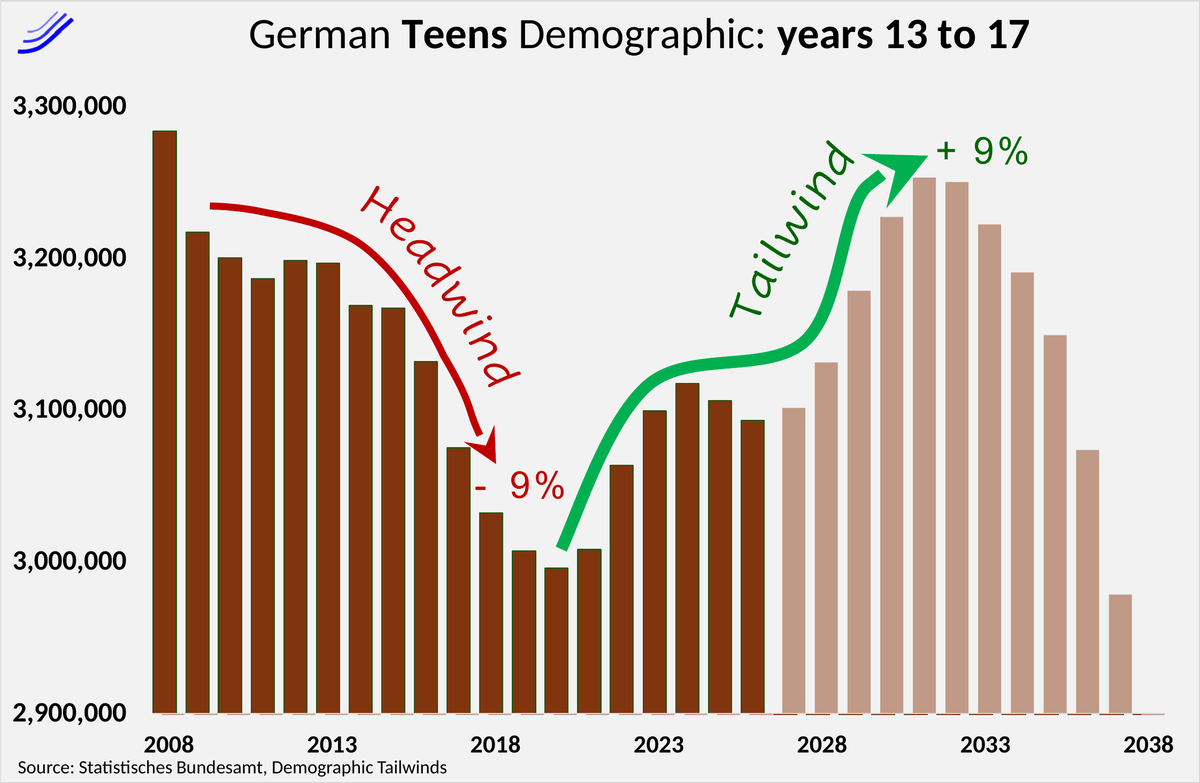
Figure 5: German teens have six more years of growth before they disappear.
Now I need you.
This project only works if we have a real conversation. Has your business prospered from a demographic tailwind (even if you didn’t recognise as such until now) or have you needed to pivot to new locales or markets and away from a declining population. We’ve seen pitches for online education in China, Nigeria, and Kenya. Guess which locations have a demographic tailwind. We’ve seen industry forecasts calling for a tripling of hip replacements in the US despite that demographic topping out. On the streets of Buenos Aires we see mothers pushing prams while Frankfurt Omas balance with metal walkers. Wine connoisseurs are on the rise in India and falling in France. Tell us your best demographic insight, and it may end up in a future Risky Tuesday article.
David Munro